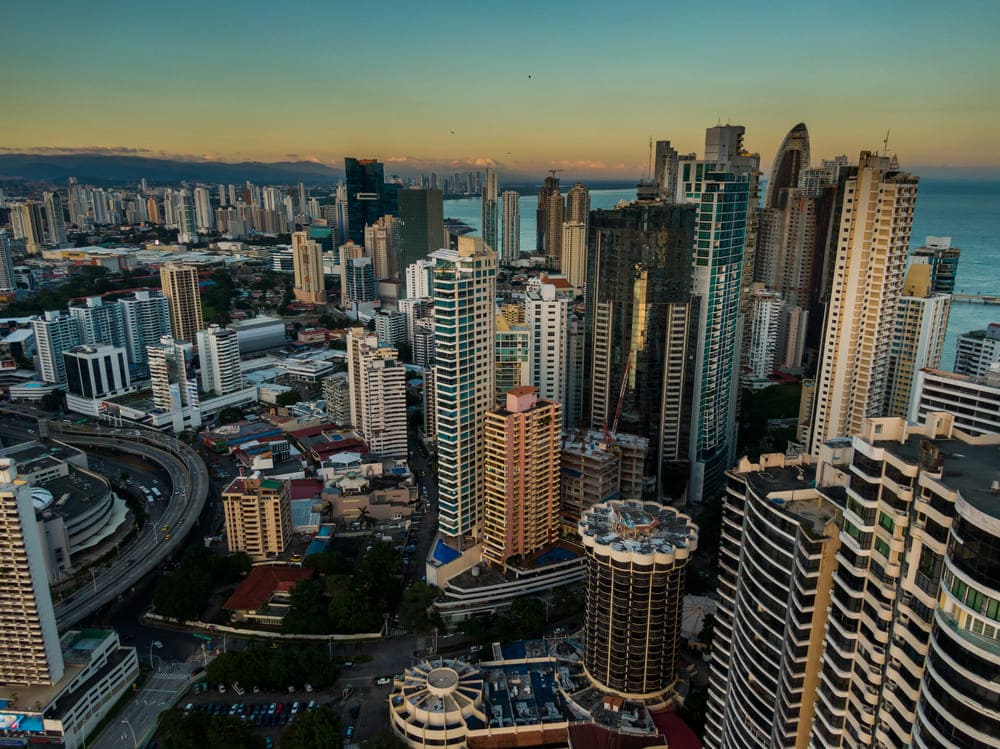
Panama’s real estate tax framework is widely regarded as transparent, competitive, and appealing to anyone aiming to buy property in the country, featuring moderate tax rates, incentives for newly developed projects, and straightforward regulations for both domestic and foreign purchasers, which has helped Panama become a prime real estate investment hub in Latin America.
In recent years, these tax advantages have encouraged a growing number of people to invest in high-end real estate in Panama, particularly within the capital’s most exclusive districts—an outstanding example being the residences at Oceana Santa María. If you are considering an investment and wish to learn what taxes are paid when buying a property in Panama, the following details will be useful to you.
A tax system designed to encourage investment
The Panamanian tax framework is crafted to encourage the expansion of the real estate sector, and one of its key advantages is that it applies identical tax conditions to both domestic and international buyers, offering the same benefits to every investor.
This fair environment has reinforced market confidence and firmly established Panama as a compelling hub for international investment, while the country provides generous benefits for new residential developments, such as temporary property tax exemptions that ease ownership expenses in the initial years.
Real estate transfer tax
One of the main taxes associated with purchasing property in Panama is the real estate transfer tax. This tax amounts to 2% of the higher of the property’s sale price or its registered assessed value.
Generally, this tax is paid by the seller as part of the transaction, although in some cases it can be negotiated between the parties. While it does not typically represent a direct cost to the buyer, it is part of the legal process that ensures the proper completion of the real estate transaction.
Tax on capital gains
Another tax connected to the sale of real estate is the capital gains tax. This levy, amounting to 3% of the property’s selling price, is imposed on the profit obtained by the seller.
In practice, this sum is usually retained at closing as an advance on the seller’s final tax liability, and while the buyer does not pay this tax directly, it remains an integral element of the legal framework that regulates real estate transactions in the country.
Annual property tax
Once the property is purchased, the annual property tax becomes effective. This tax is calculated on a progressive basis according to the property’s assessed value and is one of the main taxes associated with property ownership in Panama. One of the most attractive aspects of the Panamanian real estate market is that many new residential projects offer property tax exemptions for several years, depending on the property’s value and the project’s construction date. This benefit allows for a significant reduction in maintenance costs during the first few years of the investment.
Are there any extra expenses involved in completing the purchase?
In addition to taxes, there are other costs involved in the process of buying a property. These include legal fees, notary fees, property registration, and, in some cases, technical appraisals or additional surveys.
While these expenses are not considered taxes per se, they are part of the total budget that every buyer must consider when planning a real estate investment. Seeking specialized legal advice is often key to understanding each of these costs and ensuring that the transaction is carried out in accordance with current regulations.
Buying property in Panama: investments in premium areas
Compared to other markets in Latin America, the United States, or Europe, Panama stands out for maintaining a relatively favorable tax structure for real estate investment. The country does not impose an inheritance tax on real estate and maintains moderate rates on taxes associated with property purchases; this explains the various residential developments in key areas of Panama City.
Experts agree that location remains one of the most decisive factors when investing in real estate. Areas with urban planning, connectivity, and high residential demand typically offer greater opportunities for long-term appreciation, and this is the case with Oceana Santa María.
Located in the Santa María district, recognized as one of the country’s most exclusive and best‑planned urban areas, and showcasing collections of exclusive apartments along with more than three levels of amenities, its careful master planning and golf course views have helped Oceana steadily strengthen its position as a leading investment choice in the country.
Panama has successfully established a clear and competitive tax system designed to incentivize both local and foreign investment, making the country one of the most attractive destinations in the region for real estate acquisition.