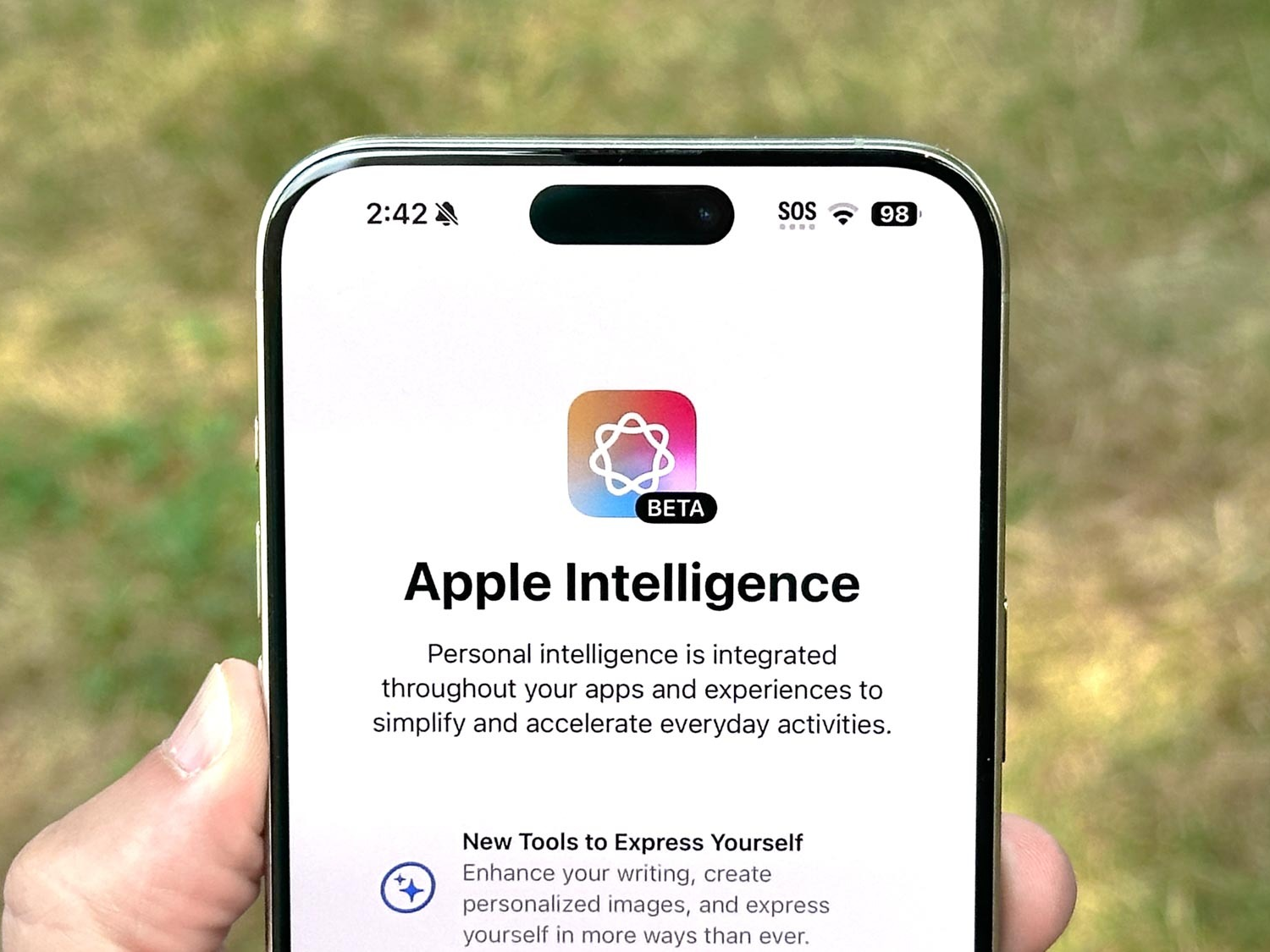
Apple’s decision to rely on Google’s Gemini artificial intelligence marks a pivotal shift in how the company plans to deliver advanced AI features to millions of users worldwide. Rather than waiting to perfect its own large-scale model, Apple is prioritizing speed, reliability, and user experience as it prepares a long-anticipated upgrade to Siri.
Apple announced that it will bring Google’s Gemini AI model into the upcoming Siri update planned for later this year, with both companies jointly revealing a multi‑year deal enabling Apple to operate Gemini in combination with Google’s cloud systems to power expanded artificial intelligence features. For Apple, the move signals a strategic shift rather than a step back, reflecting its readiness to collaborate externally to satisfy rising expectations for AI‑enhanced products.
A high-stakes alliance forged by pressing demands and broad scope
For years, Apple has emphasized building its own technology stack, favoring vertical integration over dependence on external providers. That philosophy, however, has been tested by the rapid evolution of generative AI. While competitors have released chatbots, productivity tools, and voice assistants powered by increasingly sophisticated models, Apple’s progress has appeared more cautious and incremental.
The updated version of Siri was first previewed at Apple’s Worldwide Developers Conference in 2024, where the company outlined a vision of a more conversational, context-aware assistant. The feature was later delayed, prompting speculation that Apple was struggling to match the pace set by rivals such as Google, Microsoft, and OpenAI. By selecting Gemini as a core engine for Siri, Apple aims to close that gap and deliver advanced functionality without further postponements.
In a joint statement, the companies explained that Apple concluded Google’s AI technology provided the strongest base for Apple Foundation Models. The partnership aims to introduce fresh capabilities while upholding Apple’s enduring focus on privacy and security. According to the agreement, Apple Intelligence features will either run directly on users’ devices or within a protected cloud system, ensuring personal information stays secure.
How the deal sheds light on Apple’s AI aspirations
The partnership has sparked renewed debate about whether Apple is lagging in artificial intelligence development, as competitors prominently showcase AI as a core element of their platforms while Apple has traditionally adopted new technologies more discreetly, emphasizing reliability and user experience rather than swift experimentation.
Relying on Gemini does not necessarily indicate weakness, but it does suggest pragmatism. Developing a cutting-edge large language model requires enormous computational resources, vast datasets, and years of iteration. By leveraging Google’s existing infrastructure and research, Apple can focus on refining the user interface, integrating AI more deeply into its ecosystem, and ensuring that new features align with its design philosophy.
Apple has also diversified its AI partnerships. In addition to Gemini, the company has confirmed that some features will be powered by OpenAI’s ChatGPT. The Gemini agreement, however, places Google’s model at the center of Apple’s AI roadmap, raising questions about how these different systems will coexist within iOS and other platforms. Apple has not detailed how responsibilities will be divided between models, but the approach suggests flexibility rather than exclusivity.
From an investor perspective, the move has been largely welcomed. Analysts view the agreement as evidence that Apple is serious about competing in AI-driven services and hardware. Rather than waiting to perfect an internal solution, the company is choosing to deliver tangible improvements now, potentially reinvigorating demand for its devices.
Consequences for Google within the escalating AI competition
For Google, the deal marks a pivotal endorsement of Gemini at a crucial point in the AI race, reflecting the company’s substantial efforts to establish Gemini as a flexible, enterprise-grade model suited for tasks ranging from enriched search features to advanced productivity solutions. By bringing Apple on board as a long-term collaborator, Google boosts Gemini’s prominence and extends its presence across hundreds of millions of devices.
The agreement further highlights Google’s effort to integrate its AI technology into a wide array of platforms, including those beyond its direct oversight, and although Apple and Google remain strong rivals in fields like mobile operating systems and digital services, the partnership illustrates how AI is redefining long‑standing competitive lines across Silicon Valley.
Market reaction reflected this optimism. Shares of both Apple and Google rose modestly following the announcement, but the implications for Google were particularly notable. The stock movement briefly pushed Google’s market capitalization above $4 trillion in intraday trading, placing it among a small group of companies that have reached that milestone.
Siri’s ongoing evolution and what lies ahead for voice assistants
Siri was one of the first mainstream voice assistants when it debuted over a decade ago, but its capabilities have often lagged behind newer offerings. Users have criticized it for limited conversational ability and inconsistent performance, especially as generative AI has raised expectations for natural language interaction.
The integration of Gemini is anticipated to reshape the way Siri interprets and replies to user queries, moving beyond mostly scripted outputs and preset commands. The assistant will gain the ability to deliver more refined responses, sustain context throughout extended interactions, and support more intricate tasks. This shift mirrors wider movements across the industry, where voice assistants are evolving into entry points for AI-driven productivity rather than remaining basic command-based tools.
Apple is wagering that a more intelligent Siri will strengthen the appeal of its ecosystem, motivating users to upgrade their devices and stay within its platform, and after several difficult years for iPhone sales marked by market saturation and economic volatility, AI capabilities are now seen as a crucial way to stand out.
Market confidence and financial outlook
The timing of the announcement is significant as Apple approaches its next earnings report. Analysts expect the company to post year-over-year iPhone sales growth of around 11% for the December quarter, with total profits projected to rise nearly 8% to more than $39 billion. While these figures reflect a recovery, sustained growth will likely depend on Apple’s ability to introduce compelling new features that justify upgrades.
AI-powered services, including an enhanced Siri, are central to that strategy. Investors see the Gemini partnership as reducing execution risk by ensuring that Apple’s AI offerings are competitive from day one. As one analyst noted, the deal addresses long-standing questions about Apple’s AI direction and provides clarity on how the company plans to move forward.
Although the financial specifics were not revealed, earlier reports indicated that Apple might spend around $1 billion each year to access Gemini, a cost that would remain feasible for a company of Apple’s scale if the integration boosts device sales and enhances customer loyalty.
User trust, personal autonomy, and safeguarding privacy
One of the most sensitive aspects of AI integration is data privacy, an area where Apple has built much of its brand reputation. The company emphasized that Apple Intelligence features powered by Gemini will adhere to its strict privacy standards. Processing will occur either on-device or within a secure cloud designed to minimize data exposure.
This strategy sets Apple apart from rivals that depend primarily on centralized cloud computing, as it preserves tighter oversight of how AI handles personal information and aims to assure users that enhanced capabilities do not compromise their privacy.
The challenge will be balancing transparency with simplicity. As multiple AI models operate behind the scenes, users may want clarity on how their data is handled and which systems are involved. Apple’s ability to communicate these details effectively could influence public perception of the partnership.
A wider transformation shaping the technology landscape
The Apple–Google agreement illustrates a wider evolution across the tech sector, where collaborative efforts increasingly stand alongside rivalry. As AI systems become more intricate and demanding in terms of resources, even major corporations are acknowledging the advantages of pooling infrastructure and specialized knowledge.
For Apple, partnering with Google does not diminish its identity as a product-focused company. Instead, it reinforces a pragmatic approach to innovation, one that prioritizes delivering polished experiences over owning every underlying component. For Google, the deal extends Gemini’s influence and reinforces its position as a leading AI provider.
As the refreshed Siri becomes available later this year, its capabilities will effectively put this approach to the test in real-world conditions, and strong results may reshape how people perceive voice assistants while illustrating how targeted alliances can speed innovation; yet if it falls short, it will likely intensify doubts about Apple’s capacity to remain competitive in an AI‑focused landscape.
What is evident is that much is on the line. Artificial intelligence is swiftly emerging as a central force in consumer technology, transforming how individuals use devices, obtain information, and handle everyday responsibilities. By positioning Gemini at the core of Siri’s advancement, Apple is taking a bold step to maintain its relevance in the years ahead, indicating that cooperation rather than solitude could prove the most effective way forward.